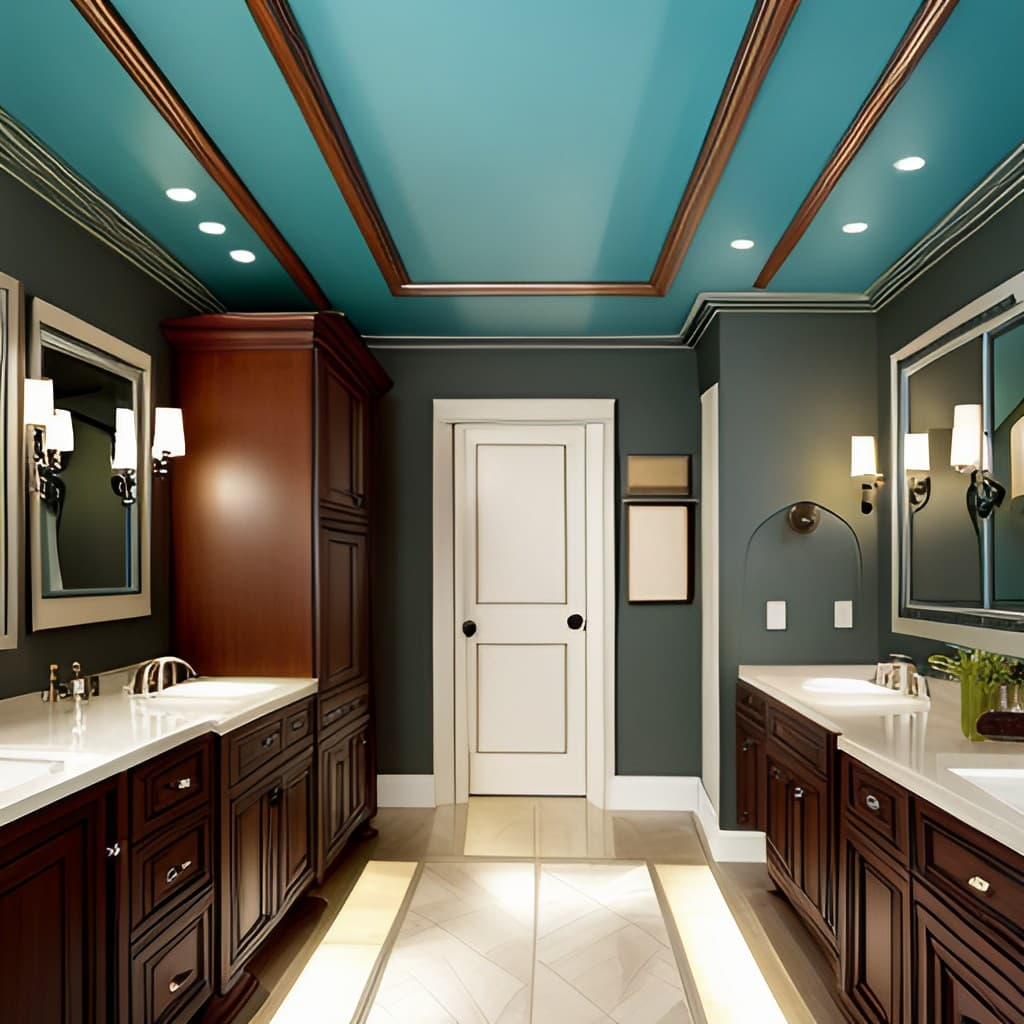
Choosing the right paint for your bathroom ceiling can significantly impact the overall look and feel of your space. With a plethora of options available, it can be overwhelming to make the best choice. This comprehensive guide will help you navigate the complexities of bathroom ceiling paint, addressing common questions and concerns.
Understanding Bathroom Ceiling Paint
Before diving into the specifics, it’s essential to understand the unique challenges that bathroom ceilings face:
High Humidity: Bathrooms are prone to moisture and humidity, which can damage paint over time.
Mold and Mildew: Damp environments create ideal conditions for mold and mildew growth.
Frequent Temperature Fluctuations: The constant temperature change can cause paint to crack and peel.
Why Bathroom Ceiling Paint Requires Special Consideration
Bathroom environments experience high moisture levels, leading to risks of mold, mildew, peeling, and cracking if the wrong paint is used. Hence, regular ceiling paints aren’t suitable for such spaces. Bathroom-specific paints contain properties that resist moisture and inhibit mold growth, making them essential in this setting.
Types of Paint Recommended for Bathroom Ceilings
Acrylic Latex Paint:
Acrylic latex is the most preferred type due to its elasticity, which helps prevent cracks and peeling under humidity. It dries quickly, resists mildew, and is easy to clean. Its water-based formulation also reduces strong odours during application.
Semi-Gloss or Satin Finish:
Opting for a semi-gloss or satin finish is ideal for bathrooms because these finishes are less porous, making them resistant to moisture absorption. They offer easy maintenance since stains or mold can be wiped off effortlessly. Satin finishes strike a good balance between durability and subtle shine.
Anti-microbial and Mildew-Resistant Paints:
Many bathroom paints contain additives such as fungicides or mildewcides, which actively prevent mold formation. These options are particularly important for ceilings directly above showers and bathtubs where condensation builds up the most.
High-Gloss Paint (Optional):
For maximum moisture resistance, some homeowners choose high-gloss finishes, although these may emphasize imperfections on the ceiling surface.
Key Factors to Consider
To select the perfect paint for your bathroom ceiling, consider the following factors:
Paint Type:
Latex Paint: This is the most popular choice for bathroom ceilings due to its durability, ease of application, and low VOCs. Latex paint is resistant to moisture and mildew, making it ideal for high-humidity environments.
Oil-Based Paint: While less common, oil-based paint offers superior durability and water resistance. However, it requires more preparation and can release harmful fumes during application and drying.
Finish:
Matte Finish: This finish hides imperfections and provides a soft, velvety look. It’s a popular choice for bathroom ceilings, as it can help to mask minor flaws.
Satin Finish: This finish offers a subtle sheen and is more durable than matte. It’s easy to clean and resists moisture, making it a good option for high-traffic areas.
Gloss Finish: This finish is highly reflective and durable, but it can accentuate imperfections on the ceiling. It’s not commonly used for bathroom ceilings but can be a good choice for accent walls or trim.
Colour:
Light Colors: Light colors, such as white or soft pastels, can make your bathroom feel larger and brighter. They also help to reflect light, reducing the need for additional lighting.
Dark Colors: Dark colours can create a dramatic and cosy atmosphere. However, they can make the room feel smaller and darker, so use them wisely.
Mold-Resistant Paint:
Mould-resistant paint contains special additives that inhibit the growth of mold and mildew. It’s a wise investment for bathrooms, especially those with poor ventilation.
Preparing Your Bathroom Ceiling for Painting
Proper preparation is crucial for a successful paint job. Follow these steps to ensure a smooth and long-lasting finish:
Clean the Ceiling: Remove any dirt, grime, or loose paint with a detergent solution and a soft cloth or sponge.
Repair Damaged Areas: Fill any holes or cracks with spackle or drywall compound. Sand the repaired areas smooth.
Prime the Ceiling: Apply a high-quality primer to seal the surface and improve paint adhesion. A mold-resistant primer is a good choice for bathrooms.
Painting Your Bathroom Ceiling
Once your ceiling is prepared, you can start painting:
Protect the Room: Cover the floor and furniture with drop cloths to protect them from paint splatters.
Apply Paint: Use a roller to apply the paint evenly to the ceiling. Start at one corner and work your way across, using long, smooth strokes.
Cut In: Use a paintbrush to cut in around the edges of the ceiling, where the roller can’t reach.
Apply a Second Coat: Once the first coat is dry, apply a second coat for a more even finish.
Tips for a Perfect Finish
Use a Good Quality Roller: A high-quality roller will help you achieve a smooth, even finish.
Don’t Overload the Roller: Too much paint on the roller can lead to drips and sags.
Maintain a Wet Edge: Keep a wet edge as you paint to avoid visible seams.
Ventilate the Room: Open windows and doors to ensure proper ventilation during and after painting.
FAQs
What are the best types of paint for bathroom ceilings?
There are a few different types of paint that are suitable for bathroom ceilings. The best type of paint for you will depend on your budget, the condition of your ceiling, and your personal preferences. Some of the most popular options include:
Latex paint: Latex paint is a durable and affordable option that is easy to apply. It is also low-VOC, which means that it is less likely to emit harmful fumes.
Semi-gloss paint: Semi-gloss paint is a more durable option than latex paint, but it is also more difficult to apply. It is a good choice for bathrooms that are prone to moisture and humidity.
Enamel paint: Enamel paint is the most durable type of paint, but it is also the most expensive. It is a good choice for bathrooms that are used heavily or that have high ceilings.
How do I prepare my bathroom ceiling for painting?
Before you can paint your bathroom ceiling, you will need to prepare it properly. This will involve cleaning the ceiling, repairing any damage, and priming the surface.
Clean the ceiling: Use a mild detergent and a sponge to clean the ceiling. Be sure to remove any dust, dirt, and cobwebs.
Repair any damage: If there are any cracks or holes in the ceiling, you will need to repair them before you can paint.
Prime the ceiling: Priming the ceiling will help to ensure that the paint adheres properly.
How do I paint my bathroom ceiling?
Once you have prepared your ceiling, you can begin painting. It is important to use a high-quality paint roller and to apply the paint in thin, even coats. You will also need to make sure that the room is well-ventilated while you are painting.
How long does it take for bathroom ceiling paint to dry?
The amount of time it takes for bathroom ceiling paint to dry will depend on the type of paint you are using, the temperature and humidity in the room, and the thickness of the paint. Most types of bathroom ceiling paint will take at least 24 hours to dry completely.
How do I clean my bathroom ceiling after it is painted?
Once your bathroom ceiling is dry, you can clean it with a mild detergent and a sponge. Be sure to avoid using harsh chemicals or abrasive cleaners, as these can damage the paint.
In Summary
Choosing the right paint for your bathroom ceiling ensures durability, ease of maintenance, and a visually appealing space. Acrylic latex paint with a semi-gloss or satin finish is ideal for this environment due to its moisture resistance and mould-prevention properties. Proper preparation, including cleaning and priming, along with adequate ventilation during application, plays a crucial role in achieving the best results.
By investing in bathroom-specific paints, you safeguard your ceiling from common issues like peeling and mildew. Whether you’re going for a sleek white finish or a bold colour to make a statement, the right paint will ensure your bathroom ceiling remains fresh and attractive for years to come.
To read more, Click here